
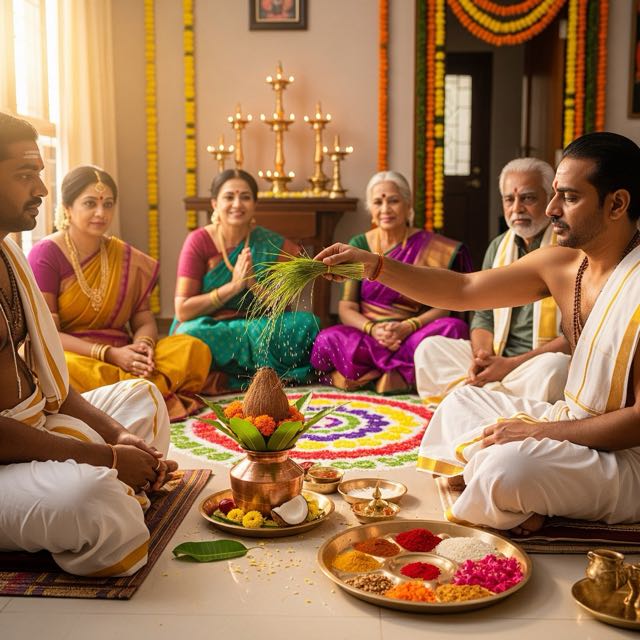
About Punyahavachanam
Punyahavachanam is a Vedic purification ritual that sanctifies a person, a home or a space with water consecrated by mantras. It is performed before most samskaras, such as naming ceremonies, griha pravesham and weddings, and after childbirth to end the period of ritual impurity. The priest performs Ganapathi puja and Varuna kalasha puja and sprinkles the sanctified water.
Punyahavachanam samagri list
- Rice (for the kalasham base) — 2 kg
- Darbha grass — 1 bundle
- Turmeric powder — 100 g
- Kumkum — 100 g
- Sandalwood paste — 1 small pack
- Akshata (rice mixed with turmeric) — 250 g
- Loose flowers — 1 kg
- Flower garlands — 2
- Betel leaves — 50
- Betel nuts — 25
- Bananas — 1 dozen
- Fruits (5 varieties) — 5 of each
- Coconuts — 5
- Mango leaves — 1 bunch
- Kalasham (copper or silver pot) — 1
- Blouse piece or new cloth — 1
- Ghee — 250 g
- Cotton wicks — 1 pack
- Deepam (oil lamps) — 2
- Camphor — 1 pack
- Incense sticks — 1 pack
- Naivedyam (prasadam prepared at home) — 1 plate
Verified pandits who perform Punyahavachanam
Frequently asked questions
How much does Punyahavachanam cost?
Punyahavachanam with a verified Rutviju pandit starts from ₹3,100 as pandit dakshina. The price can be a little higher outside the metro cities, live video pujas cost less than a home visit, and the full bill is shown before you pay.
What samagri is needed for Punyahavachanam?
The samagri list for Punyahavachanam has 22 items, shown on this page (Rice (for the kalasham base), Darbha grass, Turmeric powder and more). You can arrange it yourself; anything else your pandit needs is confirmed when you book.
Which pandits perform Punyahavachanam?
9 verified pandits perform Punyahavachanam on Rutviju, including Acharya Vimal Guruji, Alok Tripathi, Balram Purohit. You can choose one by language and experience when you book.